Helium gas is something most people use without even thinking about it: party balloons, festival arches, product launches and promotional displays. Non-toxic, non-flammable and inert, it’s the go-to gas for balloon inflation.
But helium gas safety still matters, because like any compressed gas, a helium cylinder handled carelessly can cause serious harm. This guide covers everything you need to know about using, handling, storing and transporting helium gas bottles safely.
What is helium used for and why is it useful?
For most of our customers, helium means one thing: beautifully inflated balloons. Our 10-litre helium gas bottle can be used for:
- Inflating balloons for parties, birthdays, weddings and engagements
- Creating balloon arches and displays for corporate events and product launches
- Seasonal promotions and marketing displays
- Professional balloon decorating services
- Festivals, fairs and public events
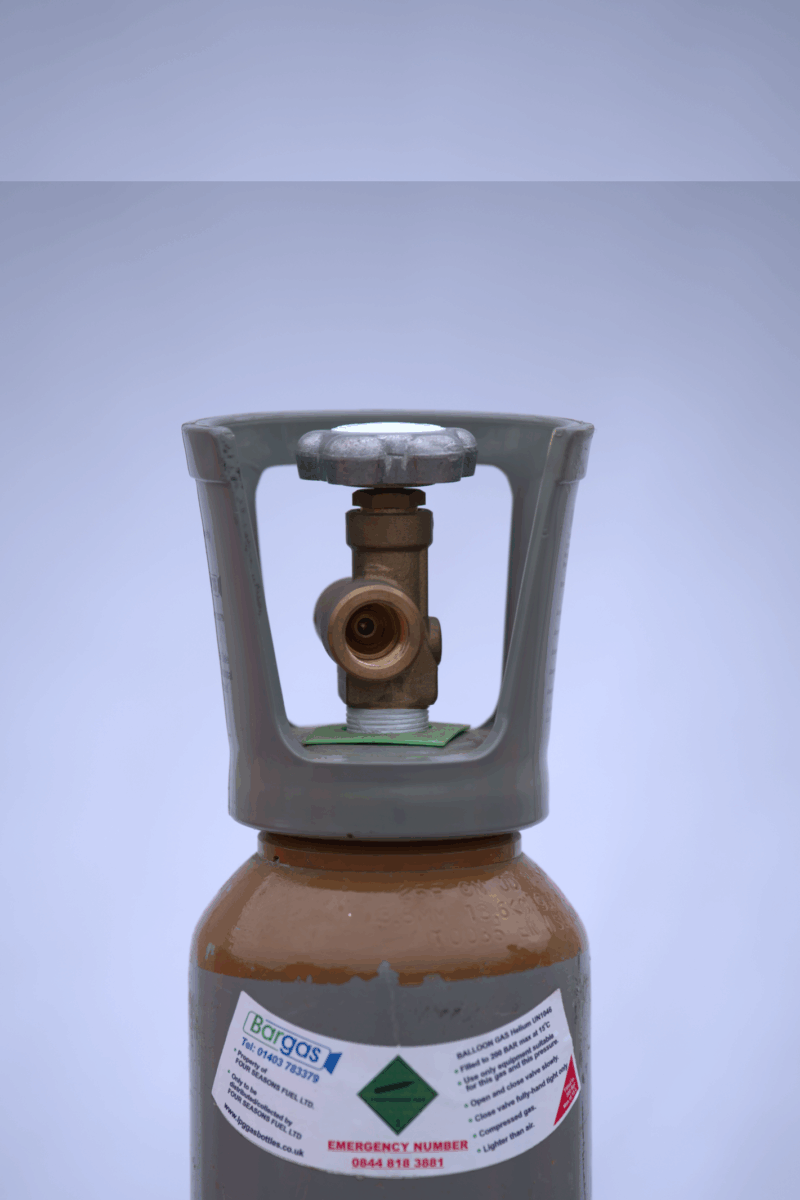
The 10-litre size strikes a balance between portability and capacity – enough gas to fill a good quantity of balloons, in a bottle you can actually move around. It comes with a filling adaptor included, so you can get started straight away without needing extra equipment.
Understanding the risks of helium gas
Helium itself is harmless in open air. It is non-toxic, non-flammable and doesn’t react with other substances. The risks associated with helium gas safety come from two sources: the pressurised cylinder itself, and the displacement of oxygen in confined spaces.
As a compressed gas, a helium cylinder stores gas at high pressure. The gross weight of our 10-litre bottle is around 20kg – substantial enough that a falling cylinder is a real physical hazard, and if the valve is damaged on impact, the sudden release of pressure can be extremely dangerous.
The second risk is asphyxiation. Helium displaces oxygen in the air around it. In a well-ventilated open space this isn’t a concern, as any leaked gas disperses quickly. But in a small marquee, van, storage cupboard or indoor event space with limited airflow, a significant leak could reduce oxygen levels to a dangerous point before anyone notices.
There is also a well-known but very serious risk associated with deliberately inhaling helium to produce the ‘funny voice’ effect. Breathing helium directly from a cylinder, as opposed to the trace amounts in an over-inflated party balloon can cause rapid loss of consciousness and death. This is not an exaggeration. It is a genuine and documented cause of fatalities, and it should be treated as such, particularly if cylinders are used at events where children and young people are present.
Handling helium cylinders safely
Our 10-litre helium bottle is a pressurised vessel weighing around 20kg – so treat it accordingly! Here are our tips:
- Always read the safety data sheet and instructions supplied with the cylinder before use
- Always keep the cylinder upright – when in use, in storage and in transit. The valve must be protected from impact
- Never drag or roll a cylinder across the floor. Use a purpose-built cylinder trolley or sack truck to move it safely
- Use only manufacturer-approved filling kits and regulators. Improvised fittings on pressurised gas cylinders are a serious safety risk
- Turn the valve fully off when the cylinder is not in use, even if you believe it is empty as residual pressure can remain
- When inflating balloons, avoid overfilling. An overfilled balloon is more likely to burst, and repeated overfilling wastes gas
- If you suspect a leak – there’s a hissing sound, frost on the valve, or the smell of gas – move away from the cylinder and ventilate the area immediately. Do not attempt to fix the valve yourself
Storing helium cylinders safely
Where and how you store your helium bottles matters as much as how you use it.
- Store the cylinder upright on a flat, stable surface. Never leave it free-standing; secure it with a wall bracket, strap or purpose-built cylinder stand
- Keep the storage area well-ventilated. Helium is lighter than air and will rise rather than pool at floor level, but good airflow is still important in case of any slow release
- Do not store in damp or wet conditions – prolonged moisture exposure can cause corrosion to the cylinder body and valve
- Keep the cylinder away from heat sources, direct sunlight and any area where temperatures may exceed 49°C. Excess heat increases internal pressure
- In commercial or event settings, store cylinders in a lockable cage or enclosure to prevent unauthorised access, particularly important if children could be nearby
- Store away from other compressed gas cylinders and combustible materials
Transporting helium cylinders safely
Helium cylinders can be transported by car, van or other ground vehicles. They cannot be transported by air. A few simple precautions will keep you and other road users safe:
- Check the cylinder for leaks before loading. If you hear hissing or notice the valve is frosted or damaged, do not transport it
- Secure the cylinder properly in your vehicle so it cannot tip, roll or move during transit. A fallen cylinder can damage the valve and create a dangerous situation inside an enclosed vehicle
- Keep at least one window slightly open when transporting inside a car or van, to allow ventilation in case of any slow gas release
- Do not leave a cylinder in a parked vehicle for extended periods, particularly in warm weather. Heat builds pressure, and a vehicle interior can reach dangerous temperatures quickly in summer
- Unload the cylinder as soon as you reach your destination and store it correctly
- If you are transporting cylinders commercially or in larger quantities, you may be subject to ADR regulations governing the transport of dangerous goods. Check current guidance from the Health and Safety Executive (HSE) if you are unsure whether these apply to you
Using helium gas safely: The short version
Helium is one of the more forgiving gases to work with. It’s stable, inert and non-flammable, which is why it’s trusted for everything from children’s birthday parties to large-scale event productions. But the cylinder it comes in is a pressurised vessel, and the gas can displace oxygen in enclosed spaces.
Treat the cylinder with care, keep it upright, store it securely, ensure the area is ventilated, and never allow anyone to inhale directly from the valve. Do that, and your Four Seasons Fuel helium bottle will reliably do its job, whether that’s floating a single balloon bunch or filling an entire arch display.
If you need a helium cylinder for your next event or business use, our helium gas is available to order online, and our team is always happy to advise on the right setup for your needs.