
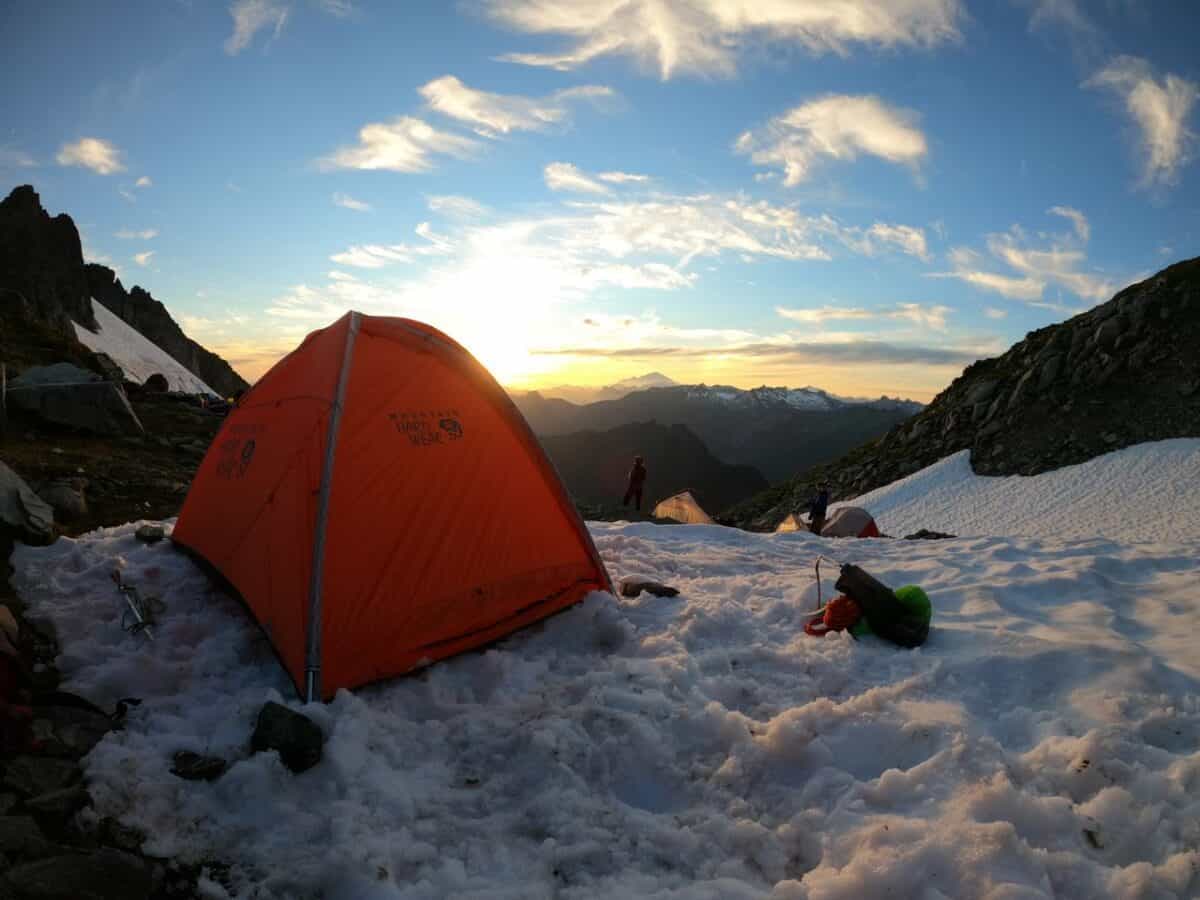
Winter camping has a lot going for it. Sites are quieter, landscapes look extraordinary in low winter light or sparkling with frost, and there’s a real sense of achievement in doing something most people write off until the warmer months. But camping in winter does demand more preparation than a summer trip, particularly when it comes to fuel, kit and knowing how to stay safe in the cold.
This guide covers everything you need, from choosing the right gas for your stove to the kit to pack for when the temperatures drop.
Which gas should you use for camping in winter?
If you take one thing from this guide, make it this: butane does not work reliably in cold weather. Butane struggles to vaporise below around 2°C, which means on a cold winter morning, when you most want a hot brew, your stove may produce just a weak flame – or nothing at all.
Propane is the right choice for winter camping. It has a much lower boiling point (-42°C), which means it vaporises and flows freely even in freezing temperatures, giving you consistent, reliable performance, however cold the night gets.
Campingaz cylinders use a butane/propane mix, which performs better than pure butane in colder conditions. For winter use, the Campingaz 907 is the better option, as its larger capacity suits longer trips, and its mix ratio gives it an edge over the smaller 904 when temperatures drop. That said, in very cold conditions, a pure propane cylinder with a suitable stove will always outperform a blended mix.
Essential kit for camping in winter
Getting your kit right makes the difference between a memorable adventure and a test of endurance. Here’s what to prioritise…
Shelter and sleep
- A four-season tent: Your tent is your most important piece of kit. Choose a four-season tent designed for low temperatures, wind and potentially snow loading; a three-season tent will let in draughts and may struggle under heavy overnight frost
- Sleeping bag: look for one with an EN 13537 comfort rating well below the temperatures you expect. If the forecast low is 2°C, a bag rated to 2°C is not enough; you want some leeway
- Sleeping mat: This is essential – don’t assume you can manage without it. Cold ground will drain your body heat far faster than cold air, and even the warmest sleeping bag loses most of its insulation when compressed underneath you. A foam mat or an inflatable mat with a high R-value (the measure of how well a mat resists heat loss to the ground) addresses this directly
Cooking and fuel
- A windshield for your stove: A winter camping essential, as wind strips heat from your pot rapidly and will dramatically increase your fuel consumption and cooking time. Most compact stoves come with or support a basic windshield, but make sure yours is compatible before you go
- More gas than you think you need: Cold weather reduces cylinder efficiency, meals take longer to cook, and you’ll boil the kettle more often. Running out of gas on a winter camping trip is far more serious than in summer
- Insulated flask: This will keep hot drinks and soup available between meals without the need to relight your stove. Your body burns significantly more energy staying warm in cold conditions, so pack plenty of high-calorie, easy-cook food
Clothing and layering
The layering system is the foundation of staying warm outdoors: a moisture-wicking base layer next to your skin, an insulating mid layer (fleece or down), and a waterproof, windproof outer shell. Rain and wind are far more dangerous in winter than cold air alone, and wet clothing loses its insulating properties almost entirely.
Pack spare dry layers in a waterproof bag. If your mid layer gets wet, you need a replacement. Extremities lose heat fastest, so high-quality gloves, a warm hat and thick socks are worth spending money on.
Lighting
Midwinter nights in the UK are long. You’ll need a reliable headtorch with spare batteries – and remember to keep the spare set inside your sleeping bag, as cold temperatures can drain battery life to almost nothing overnight. A backup light source is sensible insurance
Winter camping safety: Essential tips
- Never use gas appliances inside a tent or enclosed space
This is the most important safety rule for any camping trip, but it matters even more in winter, when the temptation to cook inside an enclosed space is understandable. Burning gas consumes oxygen and produces carbon monoxide (CO), a colourless, odourless gas that can be fatal in a confined space. Always cook outside or in a well-ventilated area, however cold it is. Our camping gas safety guide covers this and other essential precautions in full.
- Tell someone your plans
Before you leave, make sure someone knows where you’re going, where you’ll be camping, and when you expect to be back. Leave a contact number and agree a point at which they should raise the alarm if they haven’t heard from you.
- Check the forecast properly
The headline temperature is only part of the picture. Wind chill can make a 3°C day feel like -5°C, and rain combined with wind is a far greater danger than dry cold. Check a detailed forecast – the Met Office app is reliable for UK conditions – and look at wind speed, precipitation and overnight lows, not just the daytime temperature.
- Know the signs of hypothermia
Hypothermia sets in when your core body temperature drops too low. Early signs include:
- Intense shivering
- Pale, cold and dry skin; skin and lips may be blue or grey
- Tiredness
- Confusion
- Slurred speech
- Slow breathing
- Clumsiness
If shivering stops but the person is still cold and confused, that is a serious warning sign. Get the person out of wet clothing, into dry layers and a sleeping bag, and seek help. Prevention is far better than treatment – staying dry and well-fed are your two most effective defences.
- Choose your pitch carefully
Avoid exposed places where wind will be strongest, and low-lying areas where cold air pools and frost settles first. A sheltered spot with natural windbreaks like trees, a hillside, or a drystone wall makes a significant difference to overnight comfort and warmth.
- Keep your phone charged and carry backup power
Cold temperatures drain phone batteries rapidly. Keep your phone inside your sleeping bag overnight, and carry a fully charged power bank. Your phone is your emergency contact and your navigation device, so losing it to a flat battery in winter conditions is a serious problem.
Ready for your winter camping adventure?
Camping in winter is exciting and rewarding, but you need suitable fuel, high-quality kit and a sensible approach to the conditions. Get those three things right, and you’ll wonder why you ever waited until summer.
For reliable fuel that works when the temperature drops, shop camping gas today.