
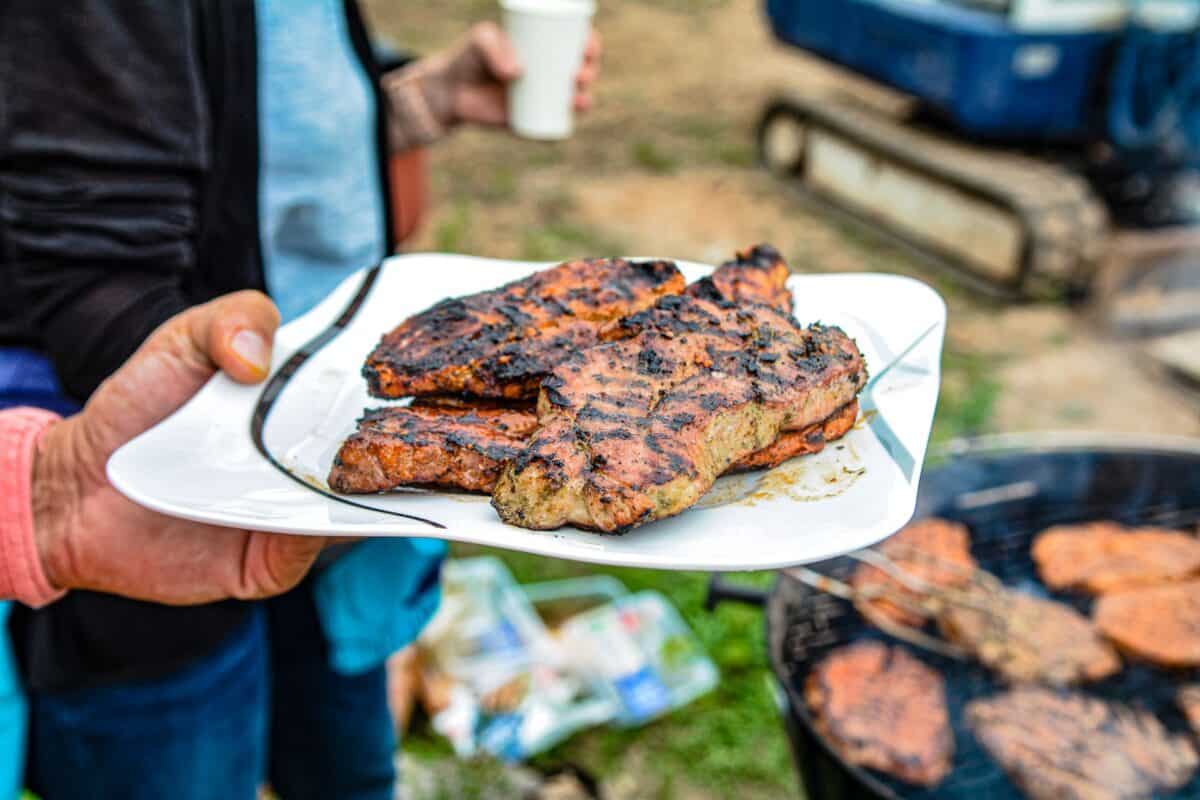
It’s one of the great British summer debates: charcoal or gas barbecue? Both camps have passionate supporters, and both types have their strengths. So, the honest answer is that neither is universally better; it really comes down to what you prefer. Do you want to be cooking in ten minutes with minimal fuss? Or do you enjoy the ritual of building a fire, the smell of real smoke, and the deep flavours that come with it?
This guide breaks down the key differences across cost, convenience, heat and flavour, so you can make the right call for your garden, your cooking style and your budget.
What does each type of BBQ cost?
Charcoal is the more affordable starting point. Basic charcoal BBQs are available for under £30, and a solid mid-range model with a thermometer and adjustable grate will set you back somewhere between £80 and £230 – enough to produce excellent results for years.
Gas barbecues tend to be a bit more expensive. Entry-level gas BBQs start from around £80, and mid-range models can cost anything from £200 to £450.
Then there are running costs to take into account. A typical bag of restaurant-grade charcoal costs around £18 for 10kg, while a smaller 5kg bag of barbecue charcoal costs £12.50, and a cooking session can use up to 2kg. This can quickly add up if it’s a hot summer with lots of opportunities for gathering outdoors.
A 11kg propane gas cylinder costs £40-£45 and lasts roughly 25 sessions. So, on a cost-per-cook basis, gas is cheaper. However, it is worth bearing in mind that over time, gas BBQs will require maintenance costs: burners, regulators and igniters all need replacing eventually, while a well-built charcoal grill has almost no moving parts and very little to go wrong.
How long does each take to reach cooking temperature?
This is where gas has a clear edge. A gas BBQ reaches cooking temperature in 10 to 15 minutes. Charcoal takes 25-40 minutes to light and reach a stable grilling temperature. If you tend to decide you want a barbecue on the spur of the moment, that wait for charcoal can feel like a long time. Gas also shuts off instantly when you’re done, while a charcoal fire needs time to die down safely.
Which is easier to use?
Gas wins on convenience. You turn a dial, press an igniter, and you’ve got consistent, controllable heat at a precise temperature. It’s particularly well suited to people who want to cater for larger groups, as gas BBQs tend to be bigger and easier to manage at scale.
Charcoal requires more involvement from the cook. You’ll need to build and light the fire, wait for the coals to reach the right stage, and manage the heat through airflow rather than a dial. That’s a drawback if you just want dinner with minimum fuss – but for many people, it’s part of the fun. With a little practice, charcoal gives you something gas can’t quite match: the ability to create different heat zones across the grill, searing hot on one side for a fast char, and lower, radiant heat on the other for slower, more gentle cooking.
Does the fuel affect the flavour?
Yes, though perhaps not always in the way people expect. For quick grills such as steaks, burgers and sausages, blind taste tests show most people can’t tell between gas and charcoal results. The flavour difference matters most on slow-cooked meats; the smoky character that charcoal delivers comes into its own over longer cooks – ribs, brisket, whole joints – where the food has time to absorb the smoke.
Charcoal also opens up smoking as a cooking technique. Adding wood chips or chunks – oak, cherry, whiskey barrel – to a charcoal fire gives you aromatic, complex flavours that you simply can’t replicate on a gas grill. You can add smoke flavour to a gas BBQ using a smoker box or foil pouch of wood chips, but the smoke flavour is lighter than charcoal. It works, but it’s not quite the same.
Charcoal vs gas barbecue at a glance
| Charcoal | Gas | |
| Upfront cost | Lower (from £30) | Higher (from £100) |
| Fuel cost per session | Higher (£2–£5) | Lower (£1–£2) |
| Time to temperature | 25-40 minutes | 10-15 minutes |
| Heat control | Moderate | Precise |
| Cooking versatility | High: sear, slow-cook, smoke | Good, but best for direct grilling |
| Smoking with wood chips | Yes, easily | Limited |
| Good for large groups | Less so | Yes |
| Ease of use | Learning curve | Very easy |
The final decision: Charcoal or gas barbecue?
Choose a gas barbecue if you want speed, simplicity and precise control. It’s ideal for weeknight cooking, large gatherings, and anyone who wants to get food on the table outside without too much fuss.
Choose charcoal if flavour and versatility matter most. It takes more time and practice, but it rewards you with better results on longer cooks, delicious smoky flavours, and the satisfaction of cooking over a real fire.
Want the best of all worlds? Dual-fuel (gas and charcoal) barbecues BBQs are increasingly popular, and worth considering if you want the advantages of both.
Whichever you choose, you’ll need the fuel to go with it. We stock restaurant-grade charcoal and gas bottles to help your summer feasts a roaring success every time.