Propane, butane and Campingaz cylinders are safe when you use and store them correctly. A gas cylinder leak is rare, but you must act quickly if one occurs. The usual signs are a strong smell of gas, a hissing sound or frost on the valve. If you suspect a leak, turn off the cylinder valve, put out all flames, open doors and windows, and move away from the area.
Here we show you how to find a leak, and what to do next.
Why gas cylinder leaks are dangerous
Liquefied petroleum gas (LPG) is highly flammable. A small spark from a light switch or a phone can ignite leaked gas. LPG is also heavier than air; it does not rise and disperse like natural gas. Instead, it collects at low levels, such as floors, cellars, drains and the bottom of a caravan or boat. A leak can stay in an area for a long time, so you must ventilate it well.
How to detect a gas cylinder leak
- Smell: LPG has no natural smell. Manufacturers add a strong odour so that you can detect a leak quickly – most people describe it as a smell of rotten cabbage or bad eggs. If you smell gas near a cylinder, hose or appliance, treat it as a leak
- Sound: A hissing or whistling sound near the valve, regulator or hose can mean that gas is escaping. Listen carefully when the appliance is off
- Frost or ice: When liquid LPG escapes, it turns to gas and becomes very cold. Frost or ice on the valve or a joint can show a leak, even in warm weather
- The soapy water test: Use this test each time you connect a cylinder, or if you think there is a small leak:
- Mix washing-up liquid with water
- Make sure there are no flames, cigarettes or other sources of ignition nearby
- Open the cylinder valve
- Brush the solution over the valve, regulator, hose and all connections
- Look for bubbles, which will show where gas escapes
Never use a match or lighter to look for a leak.
- Other signs: Check your hoses for cracks, splits or hardening. Check cylinders for dents, rust or damage to the valve. An appliance flame that is yellow, weak or unstable can also show a fault. Stop using the appliance and have it checked
What to do if you discover a gas cylinder leak
Stay calm and follow these steps:
- If it’s safe, turn off the cylinder valve by turning the handwheel clockwise
- Turn off all appliances and put out all flames, including cigarettes
- Do not operate electrical switches, plugs or doorbells, because they can make a spark
- Open all doors and windows to let the gas escape
- Move everyone away from the area
- Contact your gas supplier for advice
If the leak does not stop when you close the valve, and it is safe to do so, move the cylinder outdoors to an open area. Keep it away from buildings, drains and other cylinders. Stand it upright, with the valve at the top. Do not try to repair the valve yourself – mark the cylinder as faulty and contact your supplier to collect it.
If a fire starts, leave the area immediately and call 999. Tell the fire service that there are gas cylinders on the site.
If you feel dizzy, sick or have a headache after a gas leak, go into fresh air. Contact NHS 111 for advice, or call 999 in an emergency.
How to prevent gas cylinder leaks
Most leaks come from damaged hoses or loose connections, not from the cylinder. Good habits keep the risk low:
- Do the soapy water test each time you change a cylinder
- Replace hoses and regulators at the intervals the manufacturer recommends
- Keep cylinders upright – both when you’re using and storing them
- Store propane cylinders outdoors, in a ventilated area away from drains and cellars
- Keep cylinders away from heat and direct sunlight
- Fit the safety cap on empty or disconnected cylinders
- Have fixed gas appliances installed and serviced by a Gas Safe registered engineer
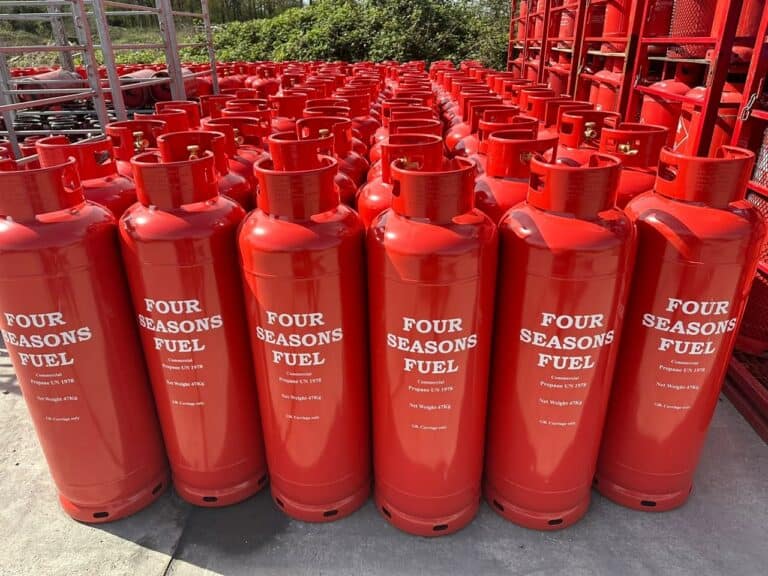
Buy gas cylinders from Four Seasons Fuel
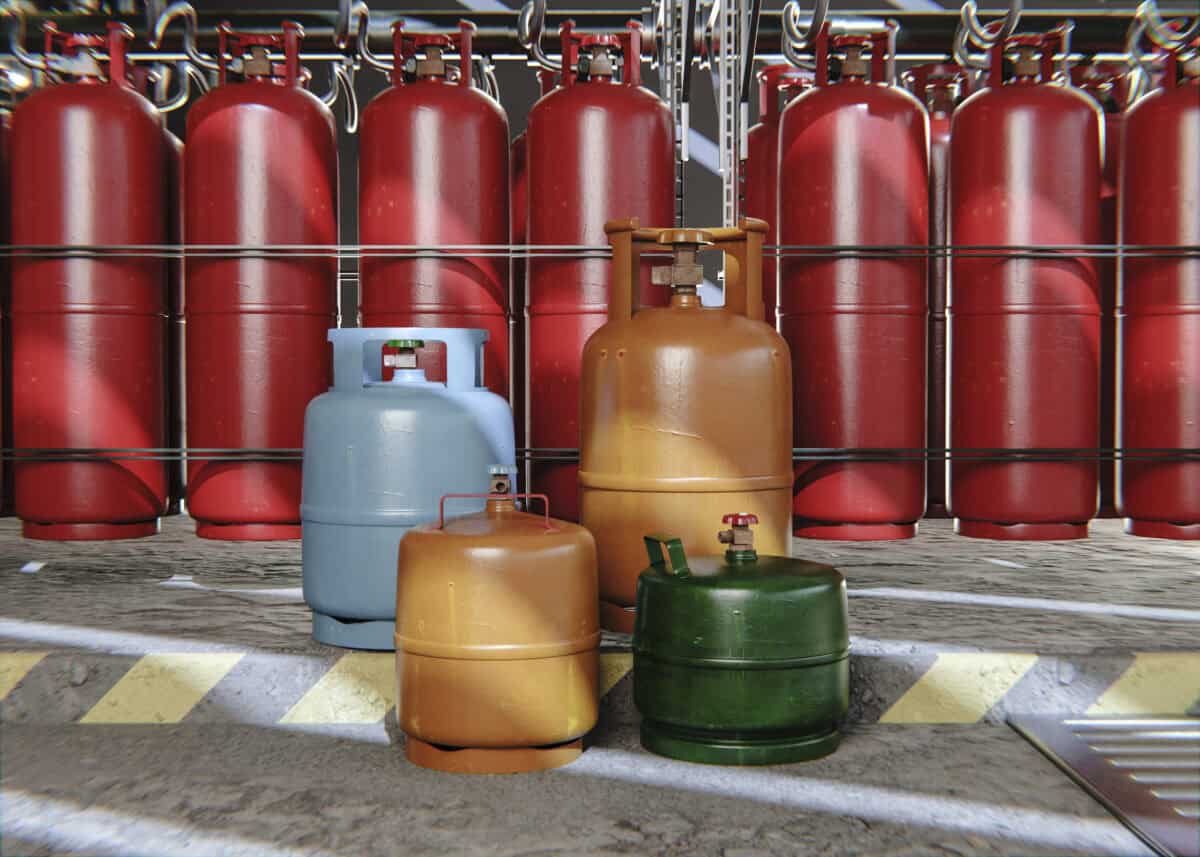
We stock a range of gas cylinders for home use and businesses, including propane, butane and Campingaz. If you have questions about the safe use of your cylinder, contact us for advice – we’re more than happy to help.